Unto the Hills: Alpha-Gal in the Ozarks / What is alpha-gal syndrome?
What is alpha-gal syndrome?
Alpha-gal syndrome is a serious allergy to red meat and other mammal products that can begin with a tick bite. It is also called alpha-gal allergy, red meat allergy or mammalian meat allergy.
What it is
Alpha-gal is a sugar found in most mammals but not in people. After a tick bite, the immune system of some people starts treating it as a threat. From then on, beef, pork, lamb, venison and sometimes dairy can set off an allergic reaction. The CDC calls it a serious, potentially life-threatening allergy.
The lone star tick and other ticks
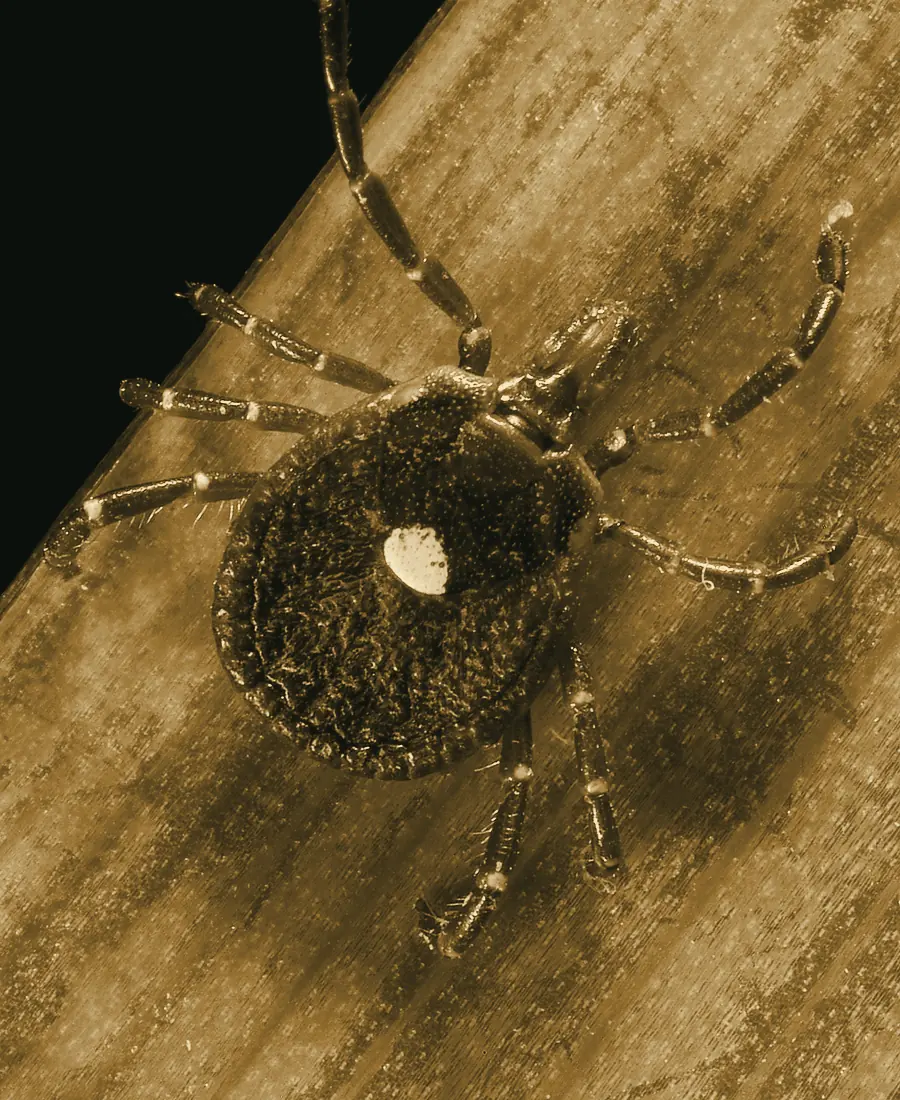
In the United States, the lone star tick (Amblyomma americanum) is the tick most often linked to alpha-gal syndrome. The adult female has a single pale spot on her back. Blacklegged ticks are linked less commonly. The best prevention is to prevent tick bites.
Symptoms, and the delay
Symptoms can include hives or an itchy rash, nausea or vomiting, severe stomach pain, heartburn, diarrhea, coughing or trouble breathing, a drop in blood pressure, swelling of the lips, throat, tongue or eyelids, and dizziness. They usually start two to six hours after eating red meat or dairy, so many people go months without finding the cause. A reaction with breathing trouble or swelling needs emergency care. See the CDC list of symptoms.
Why it matters in the Ozarks and Missouri
In a CDC study of 3,000 blood donors in ten states, 31.2% in Arkansas and 26.0% in Missouri carried alpha-gal antibodies, the two highest results (CDC, Morbidity and Mortality Weekly Report, July 2, 2026). Antibodies show exposure. Only a small share of people who carry them have alpha-gal syndrome. The CDC has also estimated that up to 450,000 Americans may be affected, and found in a 2023 survey that 42% of healthcare providers had never heard of it. Lone star ticks have been found in every Missouri county.
Getting tested
If you think you may have it, talk with a doctor or an allergist. Diagnosis combines a physical exam, a detailed history of your reactions and a blood test for alpha-gal antibodies.
Living with it
Most doctors advise avoiding meat from mammals. Some people also avoid dairy, gelatin and certain medications and other products, based on their own doctor’s guidance. The CDC keeps a list of products that may contain alpha-gal. Management belongs with an allergist or another healthcare provider, not with a web page.
Where to learn more
- CDC: Alpha-gal syndrome
- Alpha-gal Information, patient and provider education
- University of Missouri and MU Extension, research and public outreach
Common questions
Which tick causes alpha-gal syndrome?
In the United States it is most often the lone star tick. The CDC says blacklegged ticks are linked less commonly. Not everyone who is bitten develops the allergy, and no one yet knows why.
What can’t you eat with alpha-gal syndrome?
Most doctors advise avoiding meat from mammals, such as beef, pork, lamb and venison. Some people also need to avoid dairy, gelatin and certain medications or other products. An allergist can say what applies to you.
How long after eating does a reaction start?
Usually about two to six hours later, which is why the cause is easy to miss. That is later than most food allergies.
Can alpha-gal syndrome go away?
For some people the allergy eases over time, especially after avoiding further tick bites, but this varies and is not guaranteed. An allergist can follow your own test results over time.
Is alpha-gal syndrome in Missouri?
Yes. The lone star tick has been found in every Missouri county, and in a 2026 CDC study of blood donors, 26.0% in Missouri carried alpha-gal antibodies, the second highest of ten states tested. Antibodies show exposure; only a small share of people who carry them have the syndrome.
About the film
Unto the Hills: Alpha-Gal in the Ozarks is a one-hour documentary about the people in the Ozarks learning to live with alpha-gal syndrome, and the scientists working to understand it. See the film, or sign up for updates below.
This page is general information, not medical advice. If you think you have alpha-gal syndrome, see a doctor or an allergist.